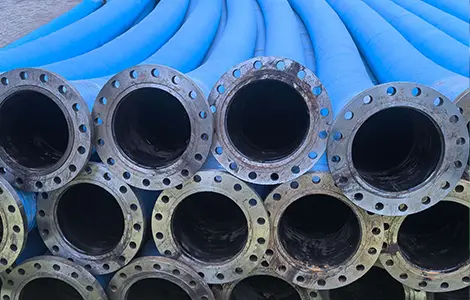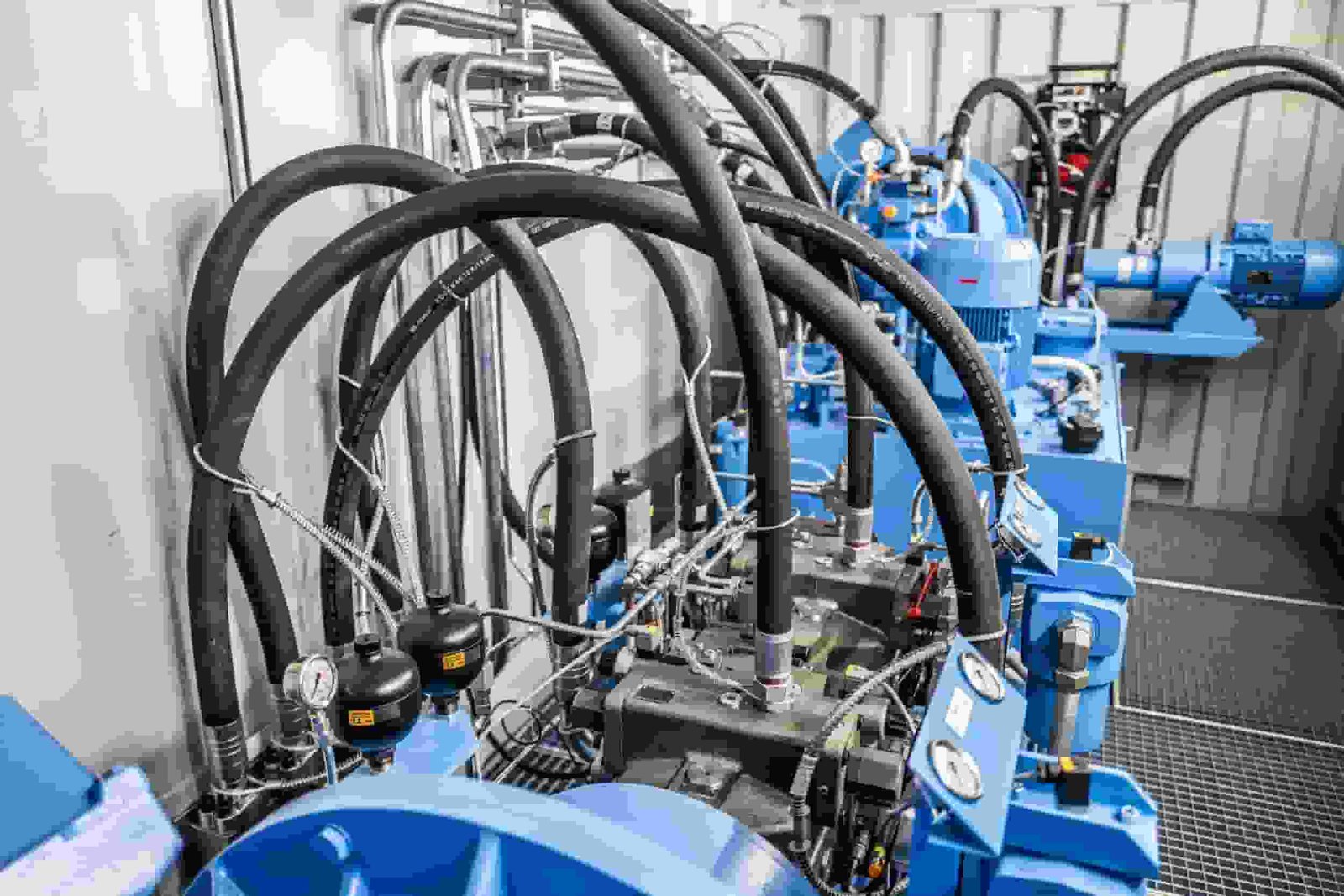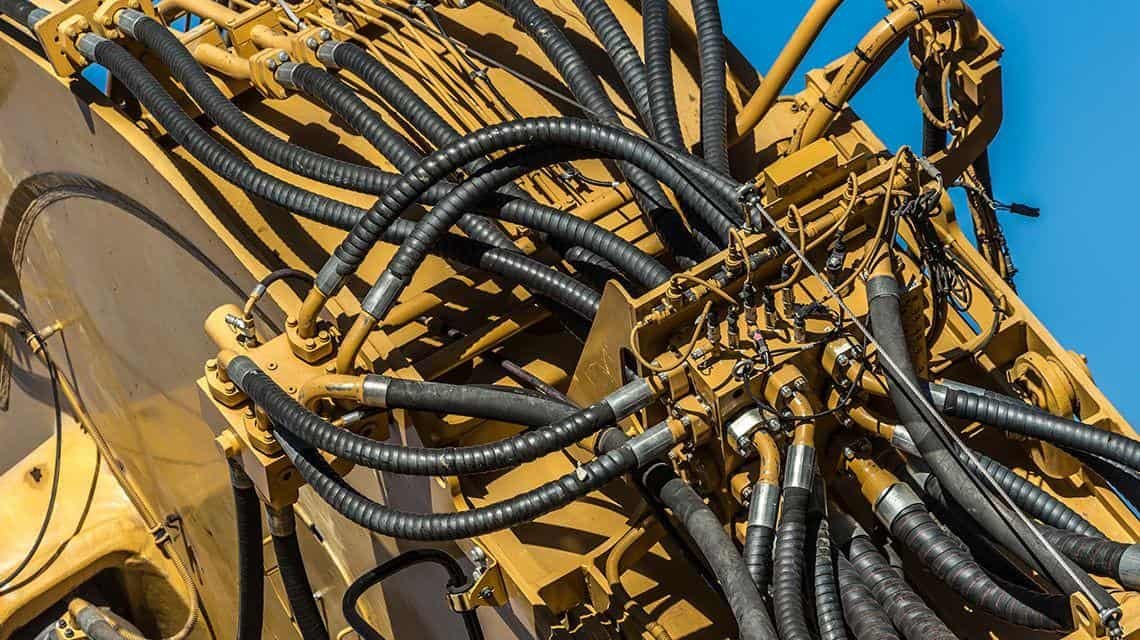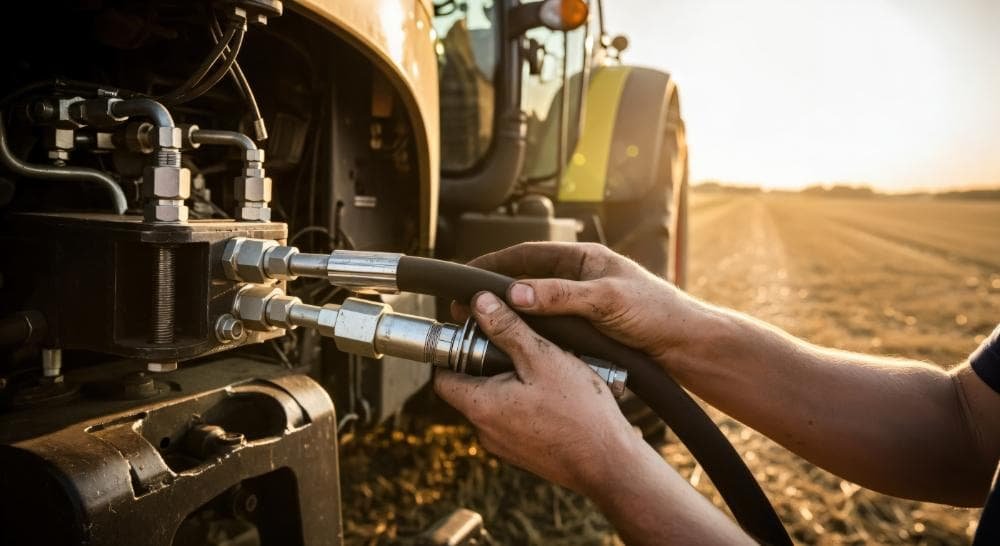
Hydraulic hose failure is rarely random. The mode of failure usually points to a specific root cause - wrong specification, improper assembly, environmental mismatch, or normal end-of-life. This field diagnosis guide helps maintenance engineers identify the cause and prevent recurrence.
1. Cover Blistering or Bubbles
Symptom: Blisters or bubbles on the hose cover, often with fluid seepage at the blister.
Root cause: Fluid is permeating through the inner tube and becoming trapped between the tube and cover. Common causes:
- Wrong tube compound for the fluid (e.g. NBR with phosphate-ester fluid)
- Inner tube damaged by chemical incompatibility or contamination
- Cover not properly vented at the fitting (some hose types vent through the braid)
Prevention: Confirm fluid-tube compatibility before specification. For synthetic fluids specify FKM or HNBR tubes.
2. Tube Erosion or Washing
Symptom: Inner tube appears washed out, eroded or scoured, often on one side.
Root cause: Excessive fluid velocity, usually from undersized hose ID. The high-velocity fluid scours the tube material. Also caused by contamination particles acting as abrasive.
Prevention: Size hose ID to keep velocity below 6 m/s for pressure lines. Install proper filtration. Confirm actual flow rate, not nominal pump rating.
3. Fitting Blow-Off or Leakage
Symptom: Hose separates from fitting or leaks at the crimp.
Root cause: Improper crimp diameter, wrong fitting for the hose, insufficient insertion depth, or damaged fitting. The most common cause is crimping to a "universal" diameter rather than the manufacturer's published crimp diameter for the exact hose part number.
Prevention: Always crimp to the fitting manufacturer's recommended diameter for the exact hose part number. Verify insertion depth. Use the correct die set. Proof-test every assembly.
4. Impulse Fatigue Failure
Symptom: Hose fails near the fitting, usually with a clean break or crack in the wire braid. Hose has been in cyclic service for many cycles.
Root cause: Normal end-of-life under cyclic loading. Accelerated by:
- Hose undersized for the pressure (cycling close to working pressure)
- Excessive bend radius at the fitting (concentrates stress)
- Twist in the assembly (introduced during installation)
- Poor-quality hose with low impulse life
Prevention: Specify hose with adequate impulse life (≥ 200,000 cycles for braided, ≥ 400,000 for spiral). Respect minimum bend radius. Avoid twist during installation. Replace proactively based on cycle count, not just appearance.
5. Cover Cracking (Ozone / UV / Age)
Symptom: Random cracks on the cover, especially on the outer side of bends. Cover may appear hardened.
Root cause: Ozone, UV or heat degradation. Common in hoses stored near electric motors, in direct sunlight, or in high-temperature environments.
Prevention: Specify ozone-resistant cover compound. Avoid storage near ozone sources. Replace aged hoses proactively. For high-temperature environments specify HNBR or FKM cover.
6. Abrasion Failure
Symptom: Cover worn through to the reinforcement, often in a localized area where the hose rubs against equipment.
Root cause: Hose in contact with equipment frame, other hoses, or moving parts. Vibration and motion accelerate wear.
Prevention: Route hoses with proper clearance. Use abrasion sleeves or guards. Specify abrasion-resistant cover compound. Secure hoses with proper clamps to prevent motion.
7. Sudden Burst (No Warning)
Symptom: Hose bursts suddenly, often near the fitting.
Root cause: Pressure spike exceeding burst margin. Common causes:
- Hose undersized for system pressure (wrong specification)
- Relief valve malfunction causing pressure spikes
- Water hammer from rapid valve closure
- Cross-connection of high-pressure circuit to low-pressure hose
Prevention: Specify hose working pressure ≥ 1.25× system relief valve setting. Verify relief valve operation. Train maintenance staff on system pressure ratings.
Need Failure Analysis Support?
Quanyi Rubber engineers can review failed hose samples and recommend corrective specification. Send photos and a description of the failure mode to our team - typical response within 4 business hours.