Hydraulic hose pressure ratings are the most critical specification - and the most commonly misunderstood. This guide explains working pressure, burst pressure, proof pressure and impulse life, and how to apply each when specifying hydraulic hose.
1. Working Pressure (WP)
Definition: The maximum continuous pressure the hose is designed to handle in service.
How to use it: The hose working pressure must exceed the maximum pressure the system can produce, including spikes. A common rule is to specify a hose with WP at least 1.25× the system relief valve setting. For high-cyclic service (excavators, mining shovels) consider 1.5× or higher.
Where to find it: Printed on the hose layline, published in the manufacturer's datasheet, and stamped on most crimped fittings.
2. Burst Pressure (BP)
Definition: The pressure at which the hose is expected to fail (burst). This is a safety margin, not an operating pressure.
Standard ratio: Per SAE J517 and EN 853/856, minimum burst pressure is 3× working pressure for braided and spiral hydraulic hose. Steam hose (ISO 6134 Type 2) requires 4×.
How to use it: Burst pressure tells you the safety margin between working pressure and catastrophic failure. A 3× ratio means a hose rated at 25 MPa WP will not burst below 75 MPa - a 200%% safety margin.
3. Proof Pressure (PP)
Definition: The pressure at which the hose is tested at the factory to verify it is free of defects. Typically 2× working pressure.
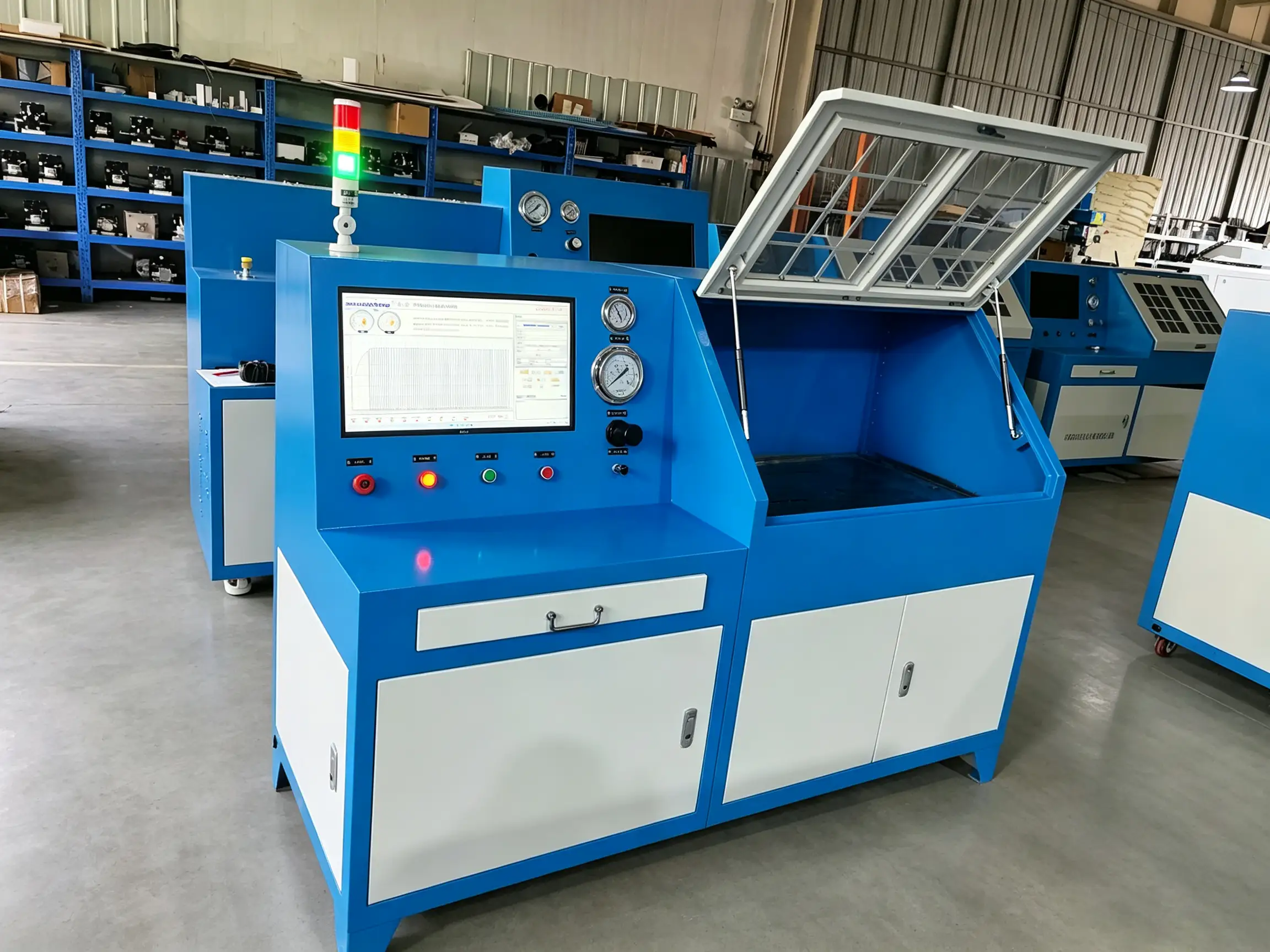
How to use it: Proof pressure is a manufacturing quality control value, not a service rating. Every Quanyi Rubber hose is proof-tested at 2× WP before shipment.
4. Impulse Life
Definition: The number of pressure cycles a hose can withstand before failure. Tested by cycling the hose between 0 and 133%% of working pressure at elevated temperature, per SAE J517 / EN 853.
Typical values:
- Braided hose (1SN, 2SN): ≥ 200,000 cycles
- Spiral hose (4SP, 4SH, R12, R13): ≥ 400,000 cycles
How to use it: Impulse life predicts service life in cyclic applications. Excavators, mining shovels and presses should specify spiral hose with 400,000+ cycle life even when braided hose meets the static pressure rating.
5. Safety Factors Explained
The 3× burst-to-working ratio is not arbitrary - it accounts for:
- Pressure spikes: Hydraulic systems routinely spike to 1.5× nominal
- Temperature derating: Above 100°C, working pressure is derated
- Aging: Hose loses strength over years of service
- Manufacturing variation: Even with strict QC, small variations exist
6. Temperature Derating
Working pressure is rated at room temperature. At elevated temperatures the hose compound weakens and working pressure must be derated:
- Up to 100°C: 100%% of rated WP
- 100-120°C: 85%% of rated WP
- 120-150°C: 70%% of rated WP (special compounds only)
Always specify the maximum continuous service temperature when ordering.
7. Pressure by Size (Reference)
Working pressure decreases as inside diameter increases (a larger hose has more surface area for the same pressure to act on). For SAE 100R2 / EN853 2SN:
| ID | WP | Min BP |
|---|---|---|
| 1/4" | 41 MPa | 123 MPa |
| 3/8" | 32 MPa | 96 MPa |
| 1/2" | 28 MPa | 84 MPa |
| 3/4" | 21 MPa | 63 MPa |
| 1" | 16 MPa | 48 MPa |
| 2" | 14 MPa | 42 MPa |
8. Selection Checklist
- Identify maximum system pressure including spikes
- Select hose with WP ≥ 1.25× system max pressure
- Verify minimum burst pressure is 3× WP
- Confirm impulse life matches cyclic duty
- Derate WP for elevated temperature
- Specify hose standard (SAE or EN) explicitly
Need Help Specifying?
Quanyi Rubber engineers help OEM buyers and distributors apply these ratings to specific applications. Send your system parameters - pressure, temperature, fluid, application - and we will recommend the correct hose specification.